minding
lesson 14:
golden platinum rule
Lesson Summary
In this lesson, students learn about the golden and platinum rules of how to treat others. Students learn that sometimes our friends do not want to be treated how we would like (golden rule) but instead how they would like (platinum rule). Students explore how to follow the platinum rule as they develop their understanding of empathy and respecting boundaries in friendships.
Purpose
Purpose: This lesson supports students in treating their friends with kindness and developing empathy by encouraging students to consider the feelings of others. Students also learn the importance of respecting the thoughts, feelings and boundaries of their friends.
Process
Time Needed: 30 - 35 minutes.
Activity: Do you like? (5 mins)
Intro (2 mins)
Activity: Understanding Empathy (10-15mins)
Teacher Talk and Activity: Understanding Boundaries (10-15 mins)
Debrief and Reflection (5 mins)
Materials & downloads
For this lesson, you will need the following:
Optional: Student workbook / notebook.

Activity: Do you like? (5 mins)
How it works:
Students stand in an open space.
The teacher reads the different statements and students move in the direction that represents how they feel. Remind students to be aware of the space and people around them so they do not bump into anyone or anything.
Step Left = Yes, I agree
Step Right = No, I disagree
Stand Still = I’m not sure
Statements:
I like spending time with my friends at break time.
I sometimes need space from my friends.
I feel happy when someone listens to me.
I like quiet activities.
I like trying new things.
I get upset when plans change.
I like playing team games.
I need time to calm down when I’m upset.
I like hugs.
I find it easy to say sorry.
Debrief:
This activity helps us to understand that even in the same classroom, the people around us don’t always think, feel, or need the same things we do, and that’s okay! What one person may like or enjoy, another person might not. This activity reminds us that people are different to us and we need to look beyond our own feelings and consider how others may feel.

intro (2 mins)
How we treat our friends is so important! If we do not treat them well, it is understandable that they might not want to be our friend anymore! There are some rules that we can follow to help us be a great friend. The first one is the Golden Rule. The golden rule is “Treat people how you would like to be treated”. This is a great rule! But what does this mean? The Golden Rule means that you need to listen to others if you would like to be listened to, showing kindness and respect if you would like it to be shown to you and so on.
Whilst the Golden Rule is great, we can go one step further though and strengthen our friendships using the “Platinum Rule”. This is where we treat others how THEY would like to be treated. Sometimes our friends don’t want to be treated how we would like to be treated - they want to be treated in a way that they like! We are going to learn how we can follow the Platinum Rule by looking at two different things: empathy and boundaries.
Activity: Understanding Empathy (10-15 mins)
A skill all great friends have is Empathy! Empathy means to understand and care about how someone else feels. Our friends are going to have their own emotions which may be different to ours and that’s okay. This also means that if they are having different feelings to us, they may not want to do the same things that we do and that’s okay too.
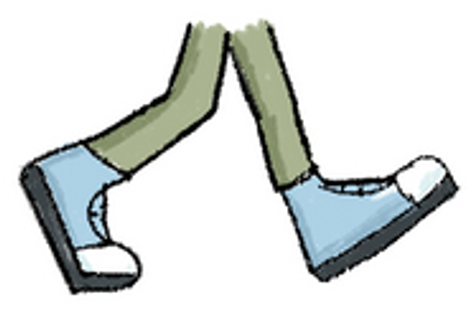
Hands up if you have heard of the phrase “Put yourself in someone else's shoes”. That’s great!
So how can we show empathy to our friends through our actions?
Ask students to share some of their ideas of how they can show empathy.
Examples:
Look and notice how our friends might be feeling (through facial expressions and body language)
Listening to the other person when they are sharing how they feel
Imagine how you might feel if you were in their situation
Respect their boundaries
Sometimes when our friends are having a difficult time or a tough day, we might be quick to act in a way that would make us feel better in that moment (golden rule). This might be by distracting ourselves and not talking about what is on our mind, having time alone, or talking about our feelings to a friend. The platinum rule is especially important when we notice our friends feeling different emotions to us.
teacher talk: Understanding Boundaries (10-15 mins)
Part of treating others how they would like to be treated is through respecting their boundaries.
Ask students to raise their hand if they have heard of the term boundaries before.
Explain to students that a boundary is: “a rule or limit that shows what a person is comfortable with so they stay feeling safe and respected”.
Share with students that they may have heard of this word before in sports - a space where you can play, a line you are not allowed to cross or go over - otherwise there are consequences - such as a foul or penalty in sport.
Our friendships also have boundaries - invisible lines that we need to make sure we do not cross as if we cross them we may upset or annoy our friend.
What boundaries might our friendships have? Ask students to share their ideas and write answers on the board.
Examples may include:
Respecting a friend’s personal space
Respecting a friend’s belongings or equipment
Accepting when they say “no” when we have asked them to do something, such as play a game
Respecting a friend when they are feeling different emotions to us
Not pressuring a friend to share their thoughts or feelings if they don’t want to
Activity:
Sometimes we want to do something with a friend, but we need to check if they’re okay with it. This helps us to learn what our friends' boundaries are.
I am going to share some different situations and we’re going to practise how we can respond. There are three ways we are going to show our answers:
Yes I Can (Stand up and put thumbs up) – It’s okay to do or say this.
No I Can’t ( Sit down and thumbs down) – It’s not okay for me to say or do this.
I Need To Ask (Stand up and place both hands on your head) – You need to ask first to check if it’s okay.
Teacher tip: Students can either complete this standing up or sitting down.
Situations (teacher to decide how many to go through):
You want to borrow a friend’s soccer ball.
You want to hug a friend who looks upset.
You want to give your friend a compliment.
You want to sit next to someone new in class.
A friend offers to share a snack with you.
A friend has told you that what you are doing is annoying them but you think it is funny and keep doing it.
You want to join a game someone is already playing.
Your friend has a pencil you need and you want to take it without asking.
You want to show a funny video to a friend.
Your friend has said they want to be alone but you really want to spend time with them.
Debrief:
This activity helps us practise empathy and Platinum rule by treating others how they would like to be treated. When we respect someone telling us “no” this shows empathy and kindness to them. By noticing what others are comfortable with, through asking and then listening to the answer, we can make our friendships happier, stronger, and more respectful.
Lesson Debrief:
Being a great friend means noticing how others feel and showing empathy through our words and actions. We realise that our friends (and all people around us) have boundaries that we need to respect. Our words and actions affect others and that means we need to respond to our friends in a way that is respectful and caring.